
Here are 5 key parameters-90% of the pitfalls in product selection are here.
In applications such as building demolition, concrete breaking, debris removal, and scrap steel sorting, demolition and sorting grapples enable excavators to rapidly grab, transport, and sort concrete blocks, rebar, steel, and other construction waste, significantly boosting the efficiency of demolition and cleanup operations.
However, selecting a grapple isn’t as simple as just matching the tonnage to the excavator.
Failing to mount properly, insecure gripping, rapid wear, cracking after just a few months of use—many of these issues stem not from poor grab quality, but from a mismatch in model selection.
If you want to choose a demolition and sorting grapple, focus on the following five aspects.
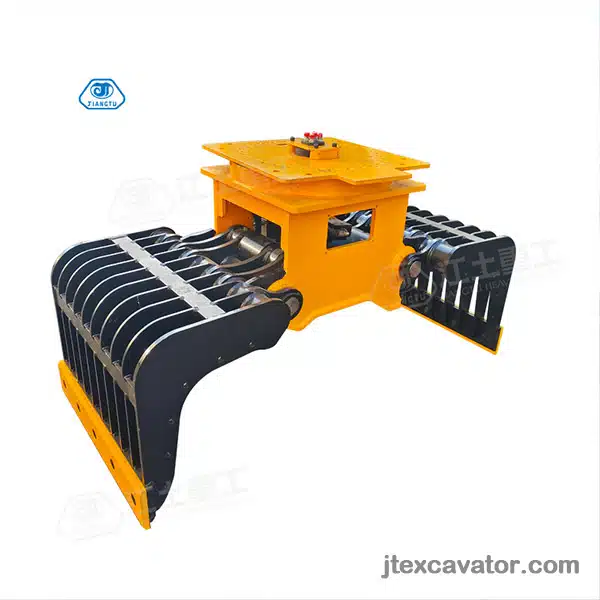
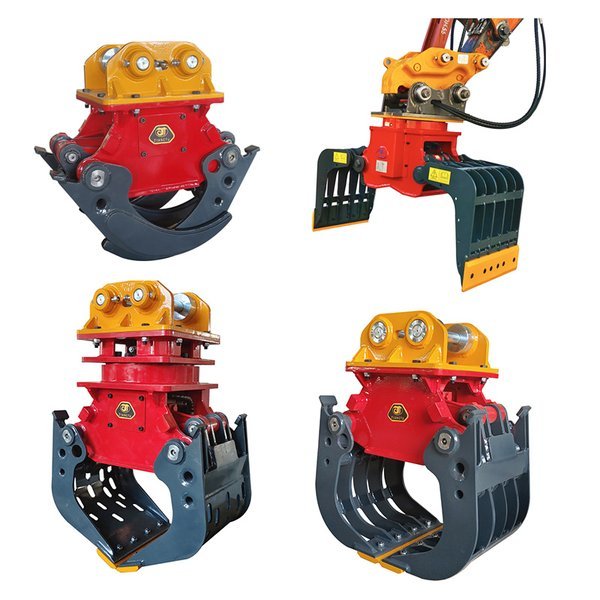
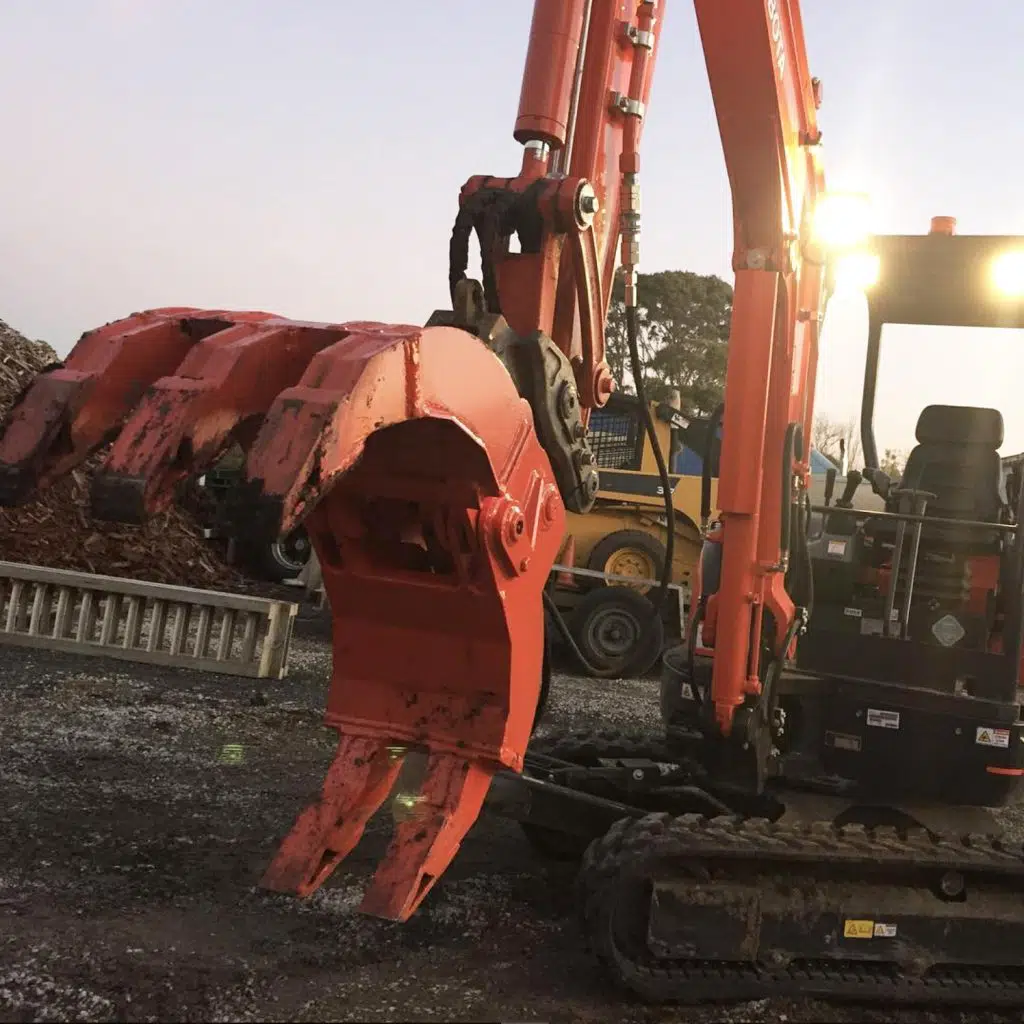
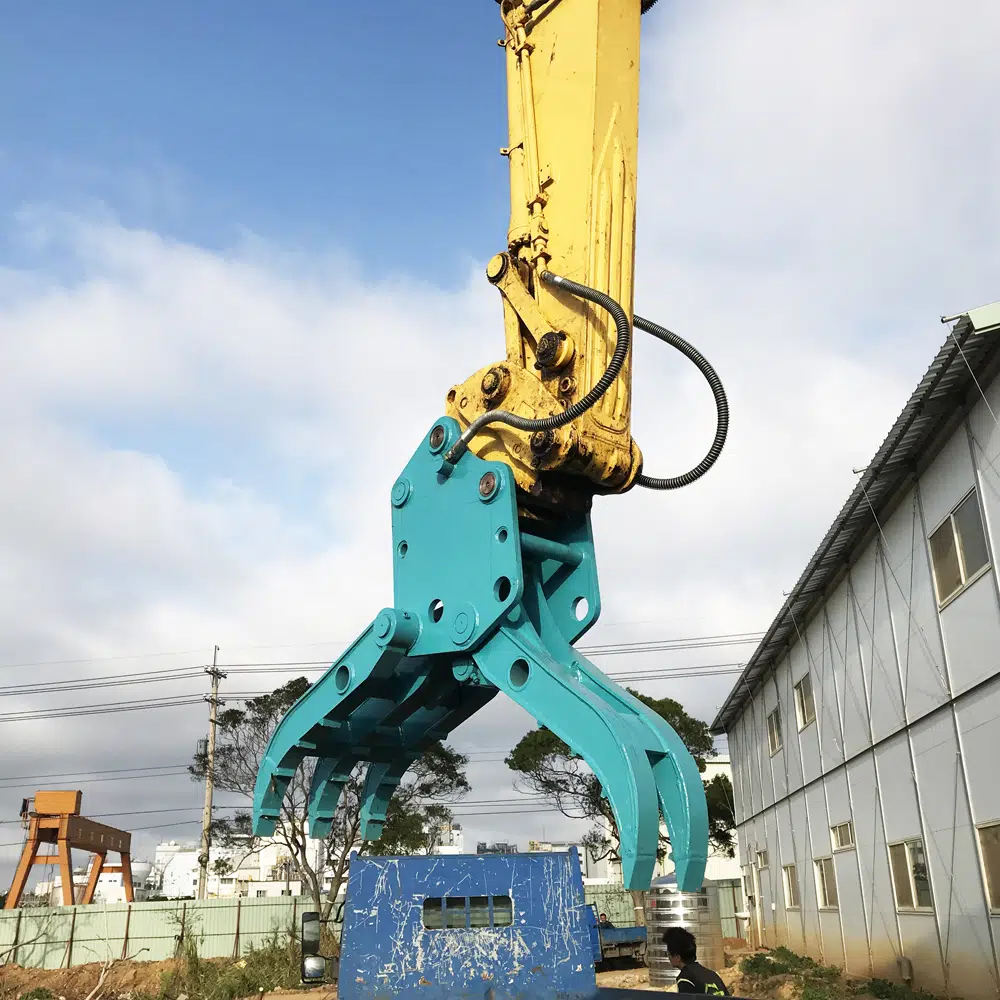
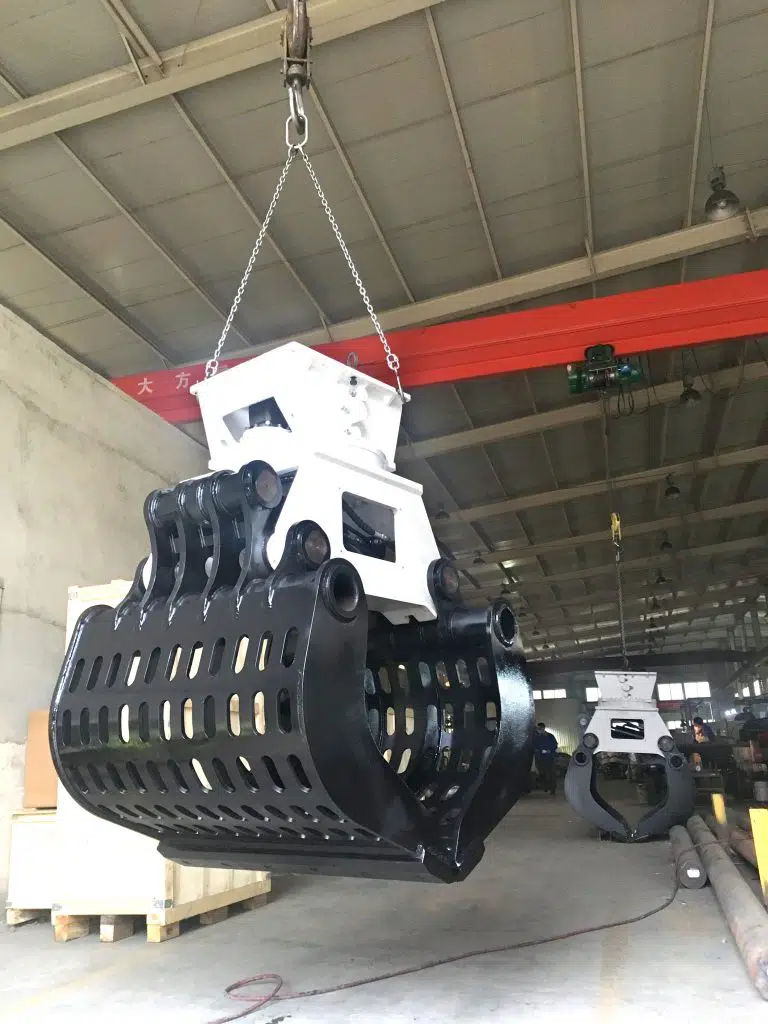
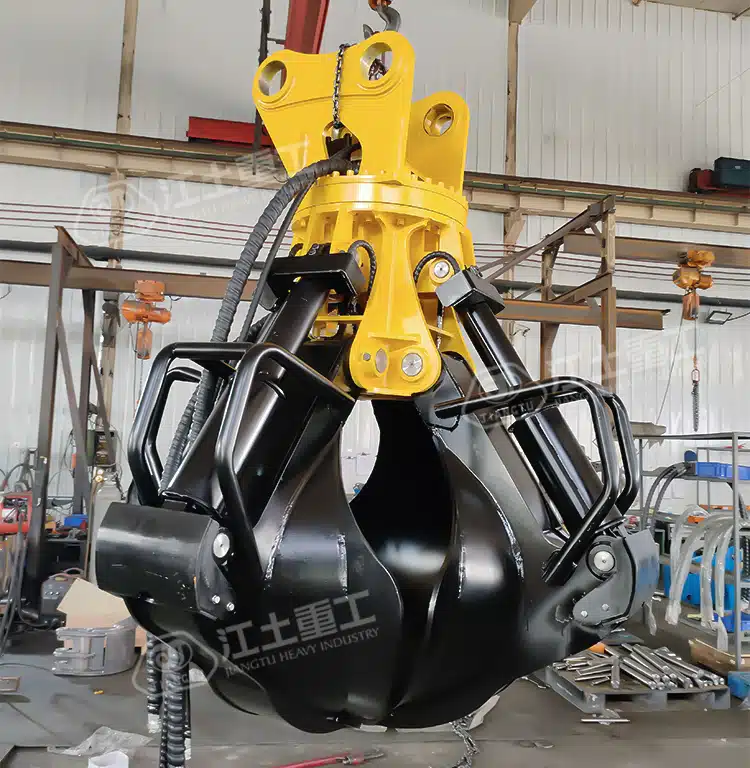
Sorting & Demolition Grapples
Excavator tonnage ≠ Grab tonnage
First, consider weight matching.
Factor both the grapple’s own weight and the weight of the material being handled into the excavator’s actual load-bearing capacity. When selecting a grapple, customers should match the opening size, cylinder lifting force, and rotational output torque to the specific shape and weight of the materials to be handled. An excessively large or heavy grapple places an undue burden on the machine and its hydraulic system, whereas an undersized grapple is prone to excessive wear under heavy-load operating conditions.
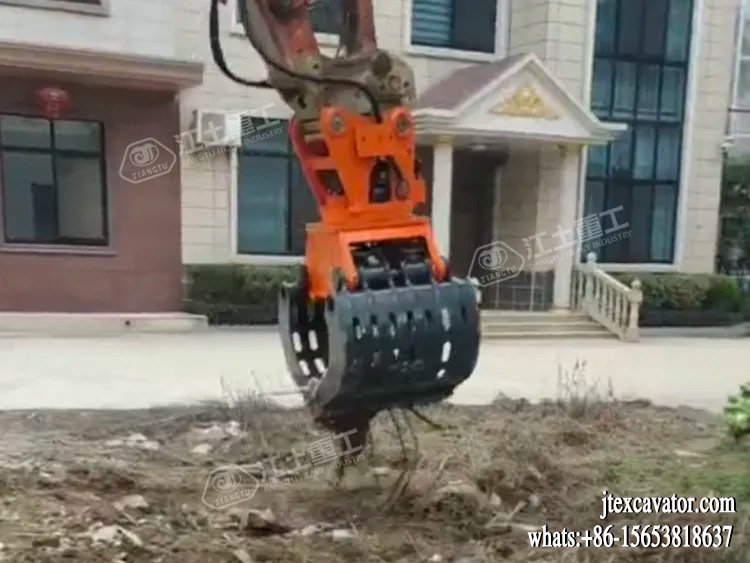
Therefore, when selecting a model, one should not look solely at the excavator’s tonnage but must also consider the following factors:
- Rated lifting capacity + actual operating radius + grapple own weight + material weight.
- It is particularly important to note that the further the excavator arm extends, the lower the actual load-bearing capacity typically becomes.
Installation dimensions must all be accurate and without any errors.
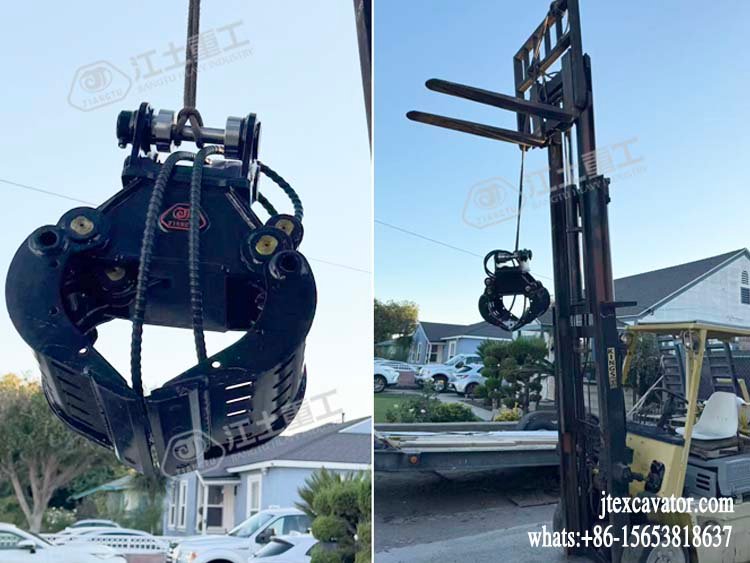
For direct-pin-mount grapples, installation dimensions must match precisely.
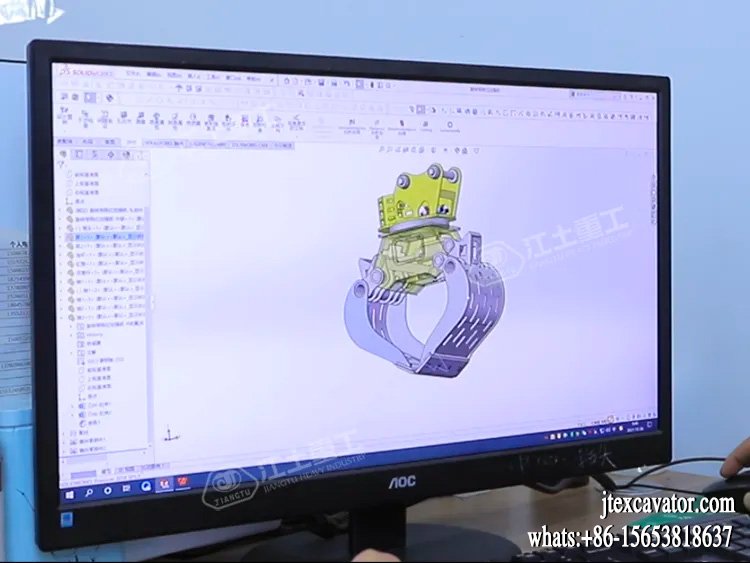
Pay particular attention to four key parameters:
- Pin diameter, pin center-to-pin center distance, and the ear width of the arm and the H-link (or mounting bracket).
- A mismatch in dimensions can not only make installation difficult but also create connection gaps, accelerating wear on the pins, bushings, and pin holes.
- Therefore, it is best to provide the supplier with both the excavator model and these four installation dimensions for verification before placing an order.
Flow rate determines speed, pressure determines gripping force
Hydraulic parameters directly affect the grab’s operating efficiency.
Insufficient flow → slow opening/closing speed;
Excessive flow → hydraulic system prone to overheating;
Insufficient pressure → inadequate gripping force, making it difficult to securely hold heavy loads;
Excessive pressure → prone to issues such as motor oil leaks and cracking of the grab.
Therefore, it is necessary to verify the actual flow rate and pressure of the excavator’s auxiliary hydraulic circuit, rather than relying solely on the main circuit parameters.
The connection method should be selected based on operational requirements.
For heavy-duty demolition work, a direct pin-on connection typically offers superior structural rigidity.
A quick-connect system is more convenient if attachments—such as buckets or grapples—need to be changed frequently.
Regardless of the choice, the pin diameter, pin center distance, and connection dimensions must match precisely.
“Almost can fit ” is not the same as being safe and reliable.
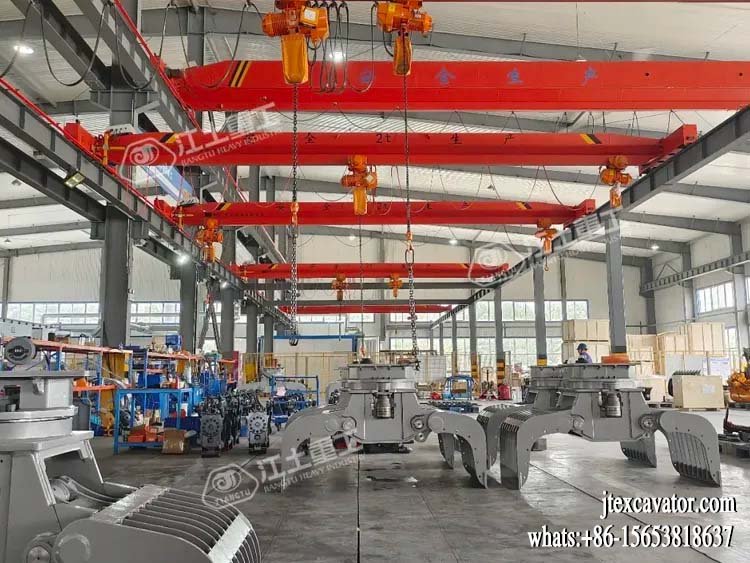
Select a grapple based on operating conditions, rather than focusing solely on price.
Different materials require specific grapple designs.
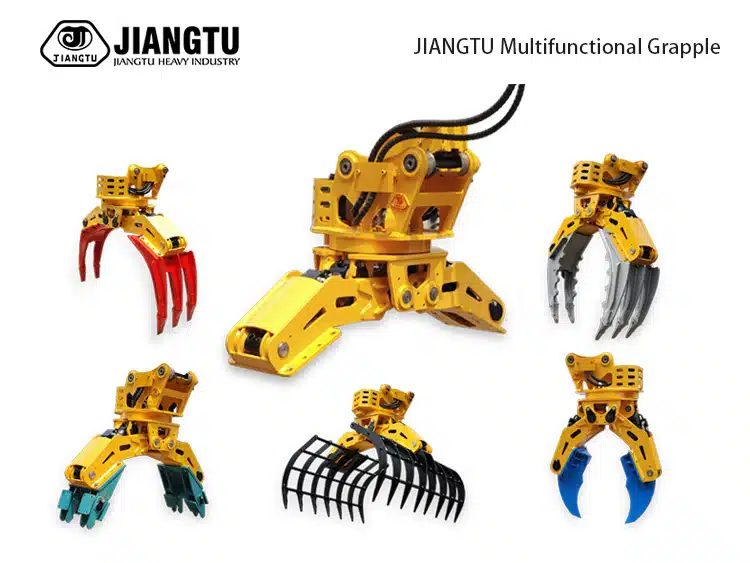
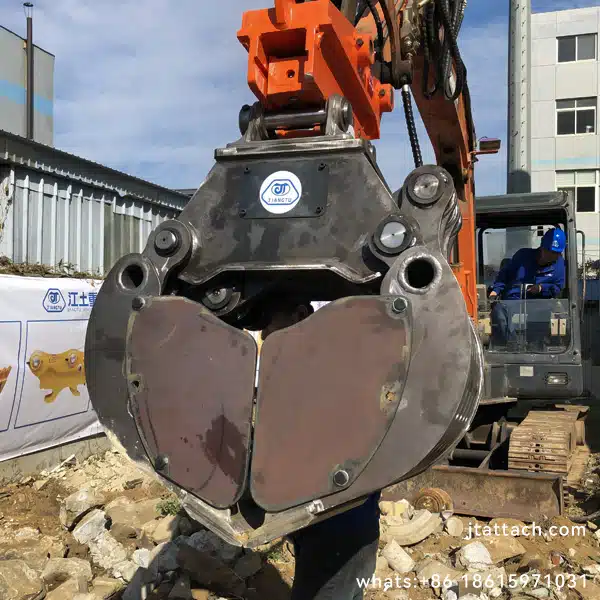
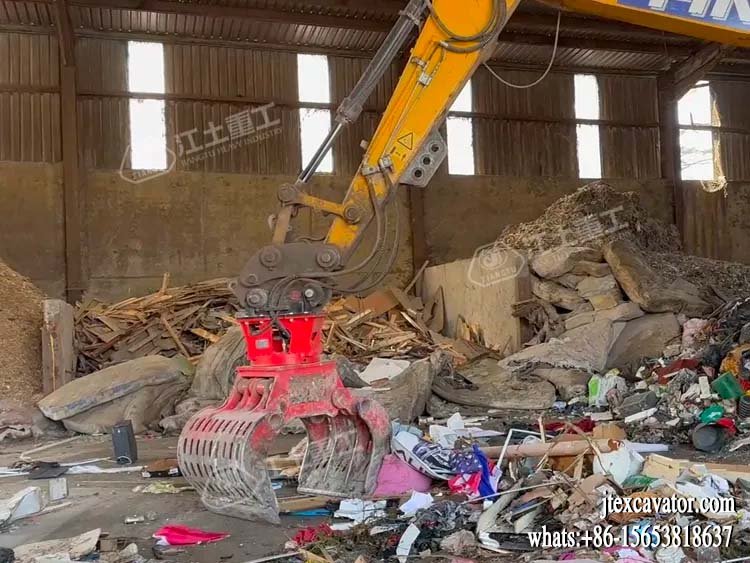
Demolition and sorting: Wide openings and box-style teeth make these ideal for handling concrete, rebar, and construction debris.
Scrap metal handling: Emphasis is placed on wear resistance and replaceable tooth tips.
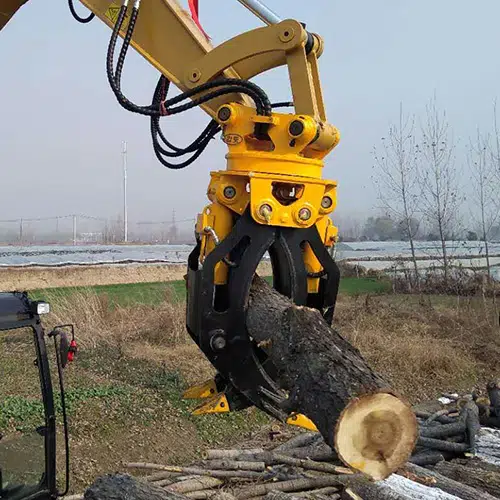
Timber handling: Curved toothallows for a better grip on cylindrical logs.
Using a light-duty grapple for heavy-duty demolition may save on initial purchase costs, but subsequent wear, maintenance, and even structural damage often result in higher overall costs.
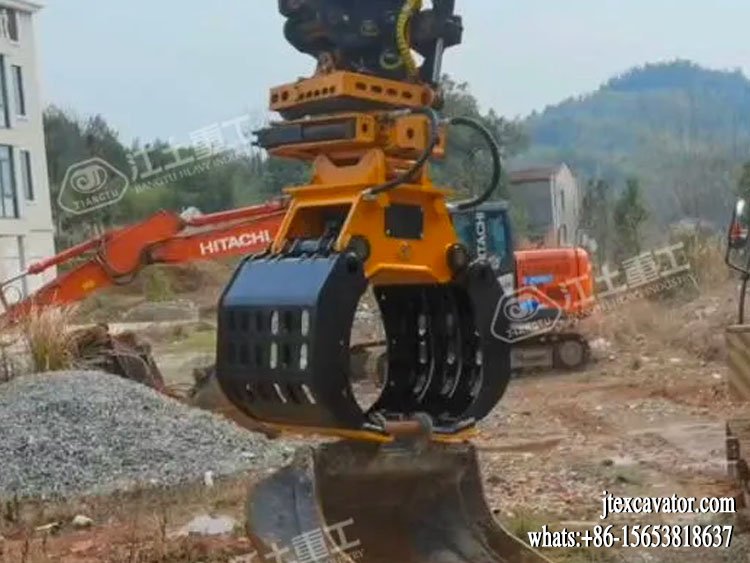
What details should you look for in a high-quality demolition and sorting grapple?
In addition to basic specifications, it is also recommended to focus on the following:
Wear-resistant materials: Check whether the teeth and main body utilize wear-resistant materials such as NM400 or NM500.
Pins and bushings: Consider the pin material, whether the pins have undergone heat treatment, and whether the bushings are replaceable.
Cylinder protection: Ensure the cylinder has reliable protection during demolition operations.
Tooth tip design: Check if the design allows for the quick replacement of wear-prone teeth.
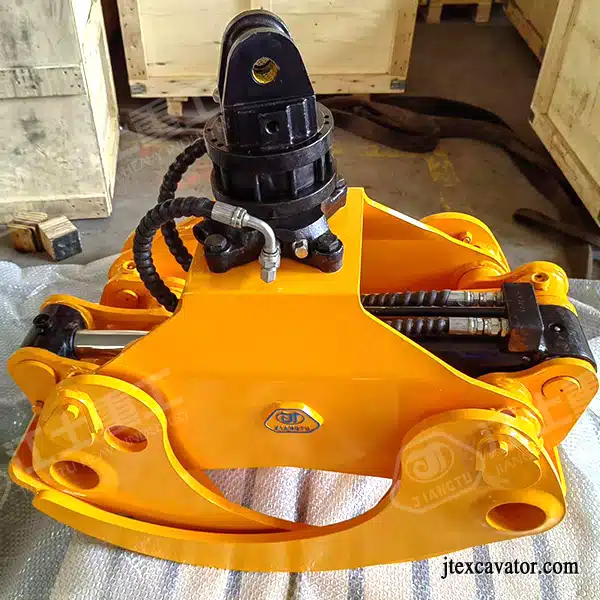
Rotation mechanism: If rotation function is required, pay close attention to the slewing system and slewing bearing.
These details often determine whether a grapple is merely “functional” or capable of long-term, stable performance.
Jiangtu Demolition and Sorting Grapple – Matched to Operating Conditions
The performance of a grapple essentially depends on how well the following elements are matched:
Excavator + Grapple + Material + Operating Conditions
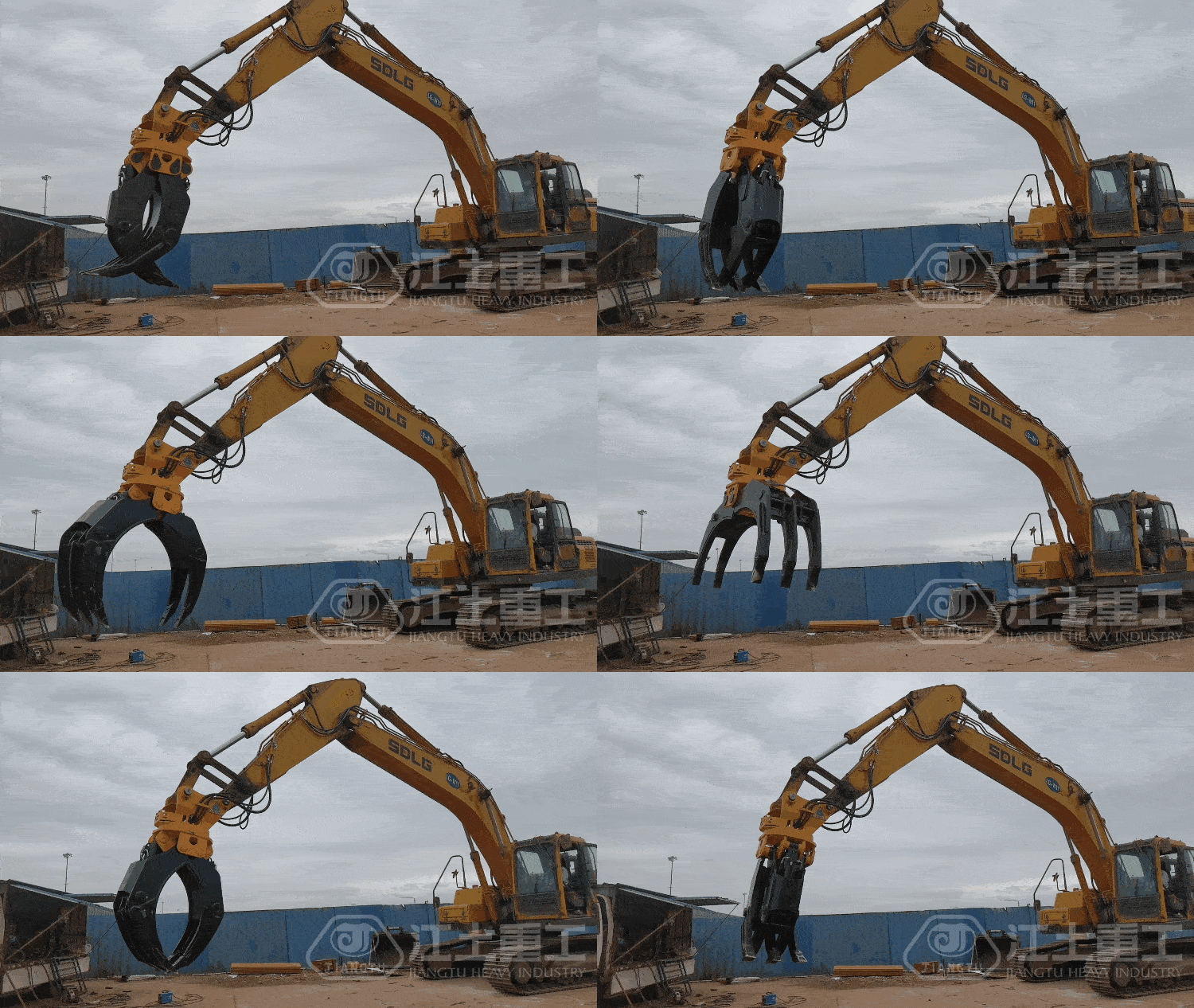
Yantai Jiangtu Machinery specializes in the R&D and manufacturing of excavator attachments. Our demolition and sorting grapples range from rotating and fixed models to lightweight and heavy-duty versions, all of which can be matched and customized based on excavator specifications and actual operating conditions.
We hold ISO9001 and CE certifications and provide comprehensive warranty and after-sales service.
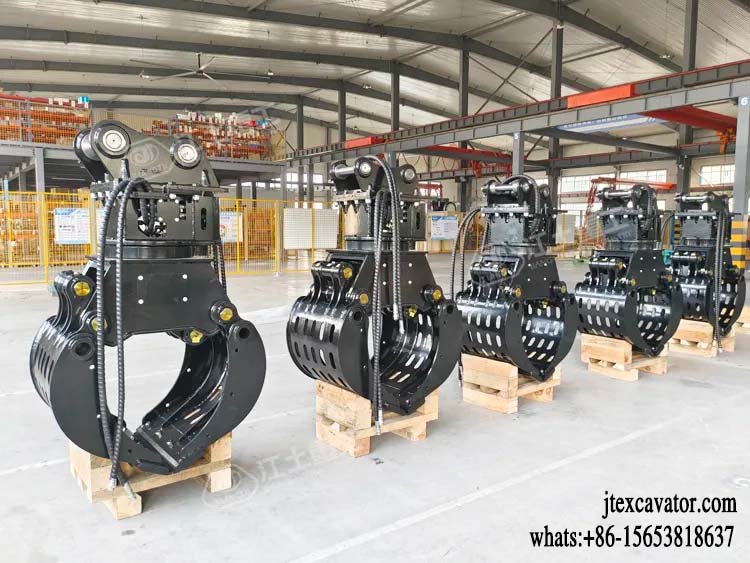
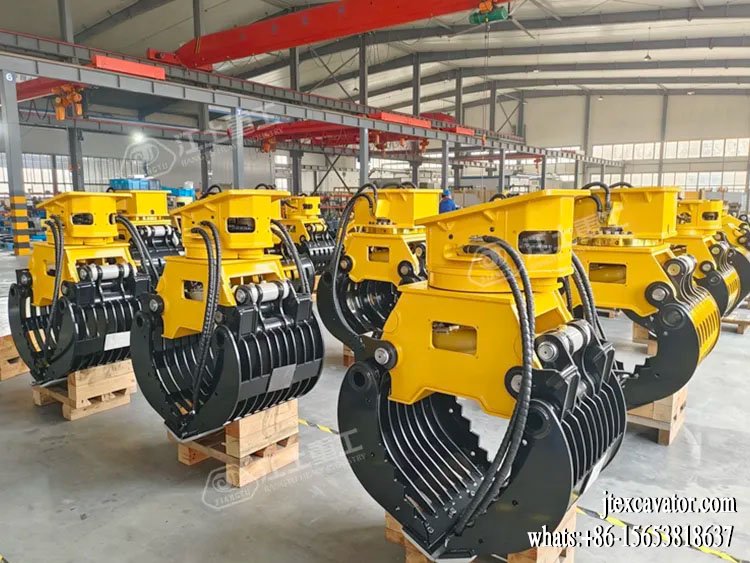
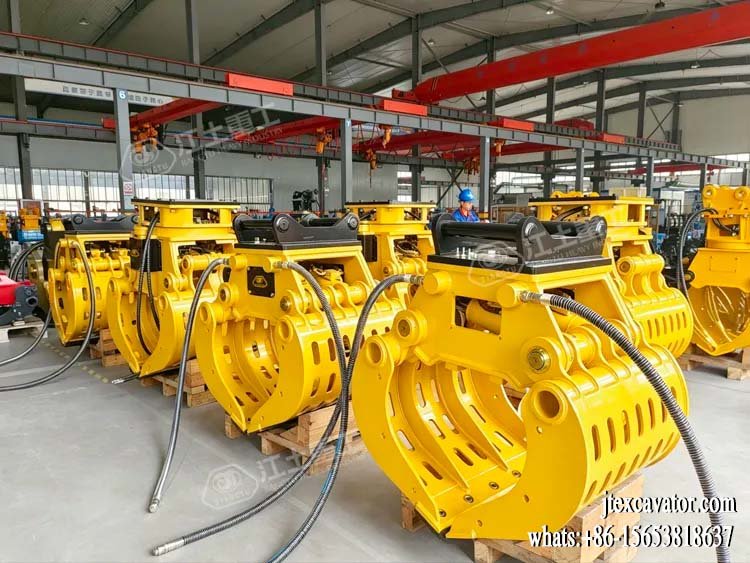
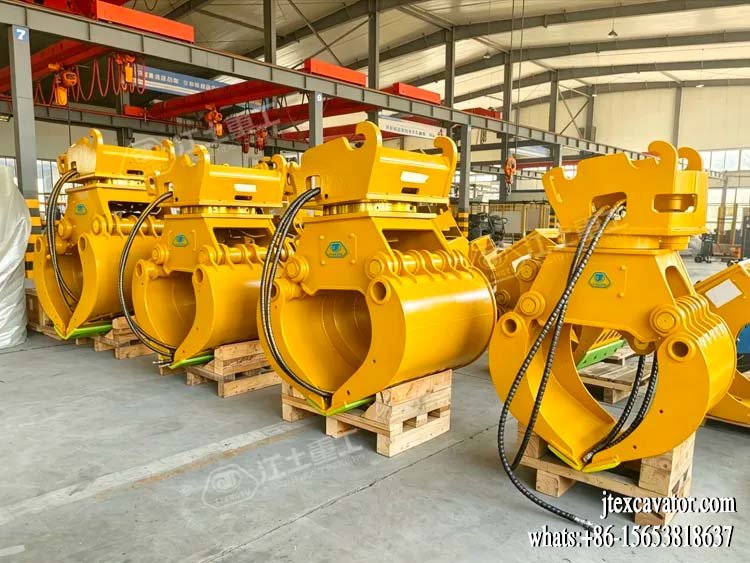
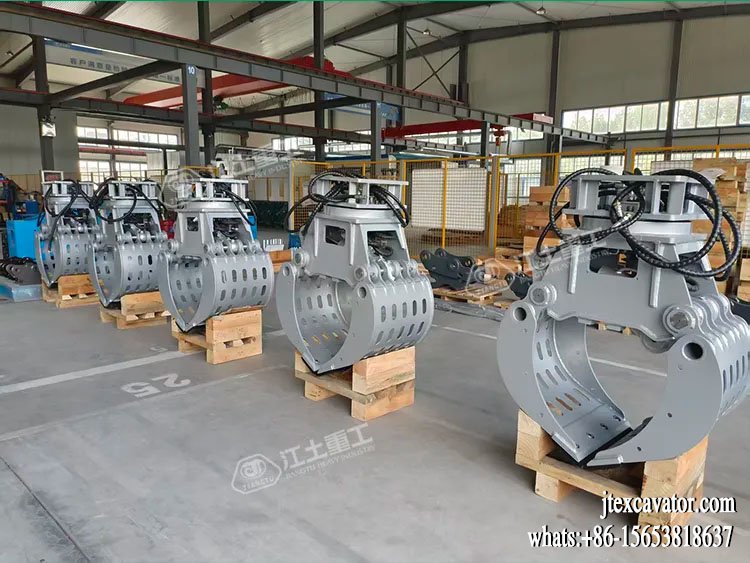
If you are in the market for a demolition and sorting grapple, rather than simply asking “How much does it cost?”, consider verifying these details first:
Excavator model + Mounting dimensions + Hydraulic parameters + Actual operating conditions
Proper parameter matching ensures a secure grip and high efficiency, guaranteeing that you make the right purchase and enjoy long-lasting performance.
Yantai Jiangtu—a professional manufacturer of excavator attachments—delivering reliable attachment solutions for diverse operating conditions.